Showing posts with label character. Show all posts

Thursday, October 17, 2013

Celebrating Teen Read Week: Out of the Easy by Ruta Sepetys

In support of ALA's Teen Read Week I'll be highlighting a new TEEN read each day. 
Challenge yourself!

Published: February 12, 2013
ISBN: 
039925692X
Genre: YA, historical fiction
Publisher: Philomel Books
Themes: adversity, achieving goals, character, race, class
Add it on: Goodreads / Amazon / Barnes And Noble/ *Indie Bound*


About The Book: It’s 1950, and as the French Quarter of New Orleans simmers with secrets, seventeen-year-old Josie Moraine is silently stirring a pot of her own. Known among locals as the daughter of a brothel prostitute, Josie wants more out of life than the Big Easy has to offer.
She devises a plan get out, but a mysterious death in the Quarter leaves Josie tangled in an investigation that will challenge her allegiance to her mother, her conscience, and Willie Woodley, the brusque madam on Conti Street. Josie is caught between the dream of an elite college and a clandestine underworld. New Orleans lures her in her quest for truth, dangling temptation at every turn, and escalating to the ultimate test.

With characters as captivating as those in her internationally bestselling novel Between Shades of Gray, Ruta Sepetys skillfully creates a rich story of secrets, lies, and the haunting reminder that decisions can shape our destiny.

What Others Are Saying: "Josie's narrative features a Dickensian array of characters; the mystique, ambience, and language of the French Quarter; a suspenseful, action-packed story; and a coming-of-age realization that personal decisions ultimately shape one's future. With dramatic and contextual flair, Sepetys introduces teens to another memorable heroine." —School Library Journal

"Josie wants more for herself. She is smart, but her intelligence does not automatically free her from social confines. Like every young woman, Josie must negotiate a world where her body is valued over her mind. Her awareness of this difficult position may be what helps her get out of the Easy and into life." —New York Times
What I Thought: Sepetys has a rich lyrical style that carefully weaves a plot full of deeply complicated characters. Set in New Orleans the southern flavor comes through and made this tale enjoyable. Josie is a strong heroine. Her journey to rise above shows how how strength combined with the help of others can help you accomplish anything.
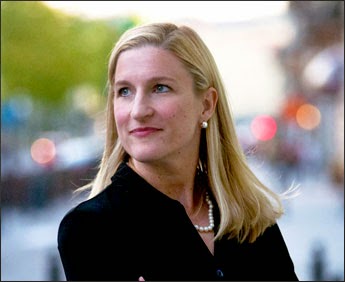
About The Author: Ruta Sepetys

Who: "In addition to music and writing, I enjoy serving on the Board at the University, collecting eccentric art, and pondering life's mysteries over long meals with my friends and family. I have a passionate love for paper and vintage ephemera. I'm quite good at crying, dancing like a strumpet, laughing too loud, and traveling. In my travels, I have visited 42 countries on six continents. My adventures have inspired dozens of stories and seeing that I am fond of both sitting and being melodramatic, my husband suggested I write a novel.
So I did." — Ruta Sepetys

Wednesday, February 15, 2012

Children Are Heroes: An Interview With Anne Warren Smith

Anne has just started to learn to play harp. 
Author Anne Warren Smith has dropped by the blog for a visit. I'm so excited to share some interesting tidbits about the author of a delightful three, soon to be four, book series about Katie. Bittersweet Summer is third in the series and will be released on March 1st. See my review here.Katie is one of the most quirkiest characters I've met in lower middle grade reading. Find out how Smith created this fabulous character!
1) Why do you write for children? 

 
       Children are heroes.  They are able to rise above the terrible things that happen to them.  I love writing about Katie and Claire for that reason.  Both girls are living with what seem like “broken families” but they forge on.  They have spirit and resourcefulness.  

2) Tell us a little bit about yourself and how you became a writer.

     As a child I read voraciously and wrote fantasy stories about being transported to a happier world. I even had a little typewriter – one that you had to turn a wheel to select each letter before printing it. Slow business!

      After college, I worked as a pre-school teacher, a job I loved because I felt more comfortable with children than with adults.  My first novel, “Blue Denim Blues,” is somewhat autobiographical in that Janet, a seventh grader gets a job in a preschool and is able to overcome her shyness there.  

3) What was the inspiration for Katie's adventures?
Releases on March 1st
ORDER HERE

I write for kids and also for adults – essays about my family and what it was like growing up with a mother who seemed distant. The same theme appears in the Katie Jordan series – her mother prefers her career to mothering. Claire’s mother is dead, but at one point in “Tails of Spring Break,” Katie realizes that Claire’s mother is gone because of a terrible accident while, on the other hand, her own mother has chosen to leave home. Which hurts more? 

4) Tell us about your process.


       My usual process is to write the entire book over and over in fewer than ten pages, trying to get the architecture of the plot right. Once I’m certain that I have a beginning, middle, and an ending, I begin to daydream and expand the story into chapters. Often, I have a major scene in my mind and am writing toward that scene. 
       In “Bittersweet Summer,” the scene that entranced me was Mom’s concert. I loved the noise and the crowd and the excitement. At the same time, my heart ached for the whole family. Katie’s dad still misses his wife and knows no matter how he tries, he cannot take her place for the children. Tyler simply wants his mom back to cook for him and hold him. Katie sees how the crowd loves her mother, but also hates the idea of sharing her with all those strangers. She sees her mother’s joy in performing, which is quite amazing, I think, for a fourth grader. When she realizes she can’t compete with that, she also sees that she needs to move on, understanding that she and Dad and Tyler are a family no matter what. 
The voice is incredible. How did you accomplish this? When I am writing I transport myself back to the person I was. By tapping into the people we were, and still are, we can remember how things looked, but also how they sounded. 

5) What does a typical writing day look like?
 I'm a morning person so my most productive time is between 8:30am and noon. I like to first read through the pages I wrote the day before to get back into the story. There may be some revising but not a lot. What I do before 8:30am is just as important to my routine. Swimming or walking usually lay a good foundation for me to start my day.

6) Where is your favorite place to write? Now I have my own office, which I really love. I do best sitting at my desk in front of my computer. I prefer silence when I write.

7) What did or do you find most challenging in creating the story and getting it published? What do you wish you would have known?

My first editor was wonderful Jean Karl of Atheneum. Her letters were full of suggestions for improving my writing and I remember that every time a letter came from her I would walk to the park, crying, thinking I could never do all that she wanted.  She sent one positive comment that I’ve never forgotten: that I was good at catching the voices of children. I still savor that.  
       My editor, Wendy McClure at Albert Whitman is a great supporter of mine.  When I offered her “Tails of Spring Break,” she thought a while. Then she said, yes, I’d like to spend more time with Katie and her family.  It wasn’t the story or the writing she liked: It was the characters. I was thrilled. 


Did you know, when you wrote Turkey Monster Thanksgiving that this would be a series? Oh, no not at all. After some time passed I realized that Katie and Claire had more to say. Especially Katie and her relationship with her mother, I felt that there needed to be some kind of resolution and that is how Tails of Spring Break came about.

8) What is the best writing advice you have ever received?

     The best writing advice I ever received was to show instead of tell. In an early story, I said that my character was frightened. My mentor suggested that the cat lying on my character’s lap might leap off with a yowl. In this way, the reader gets to participate in the story. We give info about the cat; the reader fills in the blank that the character must be frightened.


9) Are you working on a new project? Can you tell us about it?

      I’m putting the final edits on the fourth book in the series, tentatively titled “Wonder Dog of Summer.” Of course, Katie’s dog is a major player, but also Claire has to deal with the idea of getting a new mother who will bring her son to the family. We all know how Claire feels about boys and brothers and one boy in particular.


10) What advice would you give others that write for children?

Another thing I love to do is teach writers to write better. So many people don’t understand that writing is a craft. There are tricks to the trade. I urge writers to join SCBWI. They need critique groups. They can learn much from classes.


Thank you so much for stopping by and sharing with us, Anne. If you are looking for more Anne check out the links below:
Website
See my review of Bittersweet Summer here.


Just a reminder, I will be taking a hiatus from the blog from 2/16- 3/26. Come back on March 26th for another MMGM review featuring Breadcrumbs by Anne Ursu and on March 28th for an incredible interview with Carol Fisher Saller author of Eddie's War. Until then you can catch up on any reviews you've missed now that you can find them all in one place. 

Friday, June 3, 2011

Revision Friday: Dialogue

Photo Credit
I'm neck-deep into revising my WIP. I'm going over all my dialogue, because it's one of the "fastest ways to improve your fiction," according to James Scott Bell in chapter six of his book,Revision and Self-Editing. 

Bell does a wonderful job of breaking dialogue into eight essential characteristics. One of these is to make your dialogue full of subtext. He explains that dialogue should be like an "iceberg",the part we read on the page and the part underneath the surface. There should be layers beneath the surface of story,character,and theme.

1- What has happened in the story so far will affect the present. This is the back story...whether it's presented in the story or not it should effect the dialogue.

2- It's important to "know your character's deep background-the events that shaped her from childhood on." In Susan Collin's, Hunger Games,we don't fully understand why Katniss is so curt with her mother until later. 


3- Often writers say that theme doesn't emerge until much later in the writing process. So once your themes have shown themselves you can go in and tailor your dialogue. Then when the reader discovers the theme, the conversation is more meaningful in retrospect.


Bell, James Scott.Revision and Self-Editing:Techniques for Transforming Your First Draft into a Finished Novel.Ohio: Writers Digest Books,2008.


So now you know what I'm busy working on. What's on your plate today?

Wednesday, April 20, 2011

Quirky Is Good

Besides loving the word quirky I think it is a great way to develop a character. Create a list of quirks that you observe in yourself and others for use in one of your characters.


Hangs all his shirts with the collars facing the same way.

Shakes his hands and stands on his toes when he is excited.

Buttons her shirt wrong on purpose.

Continuously flips the remote from channel to channel, never really watching anything.

Pulls her hair behind her left ear over and over when she talks.

Still collects action figures but hides them in a shoebox.

Clicks her tongue when she's watching T.V.  

When she is uncomfortable in a social situation she yawns.

She collects the plastic closures of loaves of bread.


What are some of your quirkiest quirks?

Monday, March 7, 2011

Cooking the Perfect Synopsis

So, I've been working on my synopsis for my middle grade novel, which means I've scoured sources for suggestions, formats and instruction on getting it right. 

Why? Three reasons: 
1- It's a vital marketing tool, next to the Query.
2- If it isn't right you may have a flaw in your story. 
3- At some point someone is going to request one.

I've coalesced what I've researched into a basic recipe. 
*****************************************************************
Rockin' Synopsis
Preheat: Present Tense
Serves: Agents, Publishers anyone looking 

1 cup Voice               [Gives a taste of your unique voice.] 
1/3 cup   Who       [Main characters: What do they want?]
1/3 cup   Why       [Why should we care?]
1/3 cup   How       [How is he/she going to get it?]
1/2 cup   What      [What goes wrong, who/what gets in the way?]
1/2  cup  Risk            [What is he/she risk? No risk, no story.]
1/2 cup  Reward    [Do he/she get what they want or version of it?]

Mix well trimming extra words, unnecessary phrases until you have a succinct mix. Set aside for several days. With fresh eyes, revise again perfecting every sentence until you have the exact flavor you want. Then share it with several  CP's or Beta's to see if they see what you see, feel what you want them to feel. If not, revise again. Repeat this until the synopsis has risen to the desired level. 
***************************************************************************

I found several excellent suggestions for how to obtain the perfect ingredients and boiling them down to the exact proportions. Here are a few links you may find helpful!

How to Write A Synopsis
How to Write A Book Synopsis: Tips, Techniques
Writing A Synopsis
Synopsis
Writing a Synopsis That Rocks

I know there are tons more out there! Do you have a post on your blog? Share a link in your comments! 

*Check in next Monday for Middle School Review of Savvy and Scumble by Ingrid Law

Friday, September 24, 2010

Weaving Compelling Characters


"He does not write- he breathes life off the page"  -Edna O'Brien on Chekhov

      Characters are what make a story. You can have the most exciting plot with twists and turns but if the characters in your world don't feel authentic, the story will fall flat. The goal in every story is to "suspend disbelief". The best way to do this is to make sure your characters are fully developed.

There are some common threads that I have found woven into every memorable character.

1) Warp- Great characters have back stories that make them who they are. The warp of any weaving is the structure that holds the tapestry together. Our characters don't just pop out of  nowhere. They had full lives before entering the story we are telling. Spending time with your characters and creating a history that leads to who they are today will hold your character together as they face your unfolding plot.

2) Texture- Believable characters have real emotion. The most interesting tapestries have different textures to add depth. Telling your readers that your character is sad is flat and uninteresting. However, if your character is staring at the same stain on the wall, arms wrapped around her shoulders rocking back forth we see and feel that sadness. Look for new and interesting ways to convey emotion.

3) Color- Exceptional characters want something. The use of color creates the unique design of each tapestry. Our characters, from the protagonist to the ancillary characters all have wants and desires that color all their actions. These are what drive the decisions that each character makes. Spend time understanding these motivators.

4) Pattern- Memorable characters have patterns of behavior. Most patterns in a tapestry repeat themselves over and over again. Human beings have a tendency to develop routines, ways for doing things based on who they are. These can be good or bad habits. They can even change as the character grows but these are small things that make each character unique. Flipping his hair to the right, moving her hands whenever she gets excited, are all things that anchor the character in reality and keep your character interesting.

5) Tension- Larger then life characters act when their wants come in conflict with events. In a weaving if the tension is too tight the strings can break, too loose the design becomes distorted, uninteresting. Knowing when and how much tension to introduce to a character and their world is important. It is often referred to as raising the stakes. Push you're characters to the limit then stand back. If you find that your not sure what they will do next then perhaps you need to revisit their wants until it becomes clear.

These are important parts of weaving a character. It is sometimes tempting to skip or skimp on one or more or the parts and just get on with the story. However, you will find that creating full and compelling characters requires close attention to all of these details. (Tapestry above by Sylvia Heyden)

What processes do you use to get at these important parts of a compelling character?
Related Posts Plugin for WordPress, Blogger...